NLP Training in Pakistan: What to Learn, How to Choose a Trainer, and Where to Start
M. Sadeed Mirza · 17 November 2026
Updated 19 November 2026
In Russian there is no single everyday word for blue.
There are two. Goluboy, the light. Siniy, the dark. In one study, Russian speakers told those two shades apart a little faster than English speakers did. Same eyes. Same sky. Different words, so a slightly different world.
Words do more than describe what we see. They sort it.
That is the heart of NLP.
This guide is for anyone in Pakistan, or Pakistanis in the Gulf, thinking about NLP training. What NLP is. What each level should give you. What no poster will tell you. And how to choose the person you learn it from.
What NLP actually is
Neuro-Linguistic Programming studies three things and how they connect. How we think. How we speak, to others and to ourselves. And the habits both of these quietly run.
The old line in NLP is that the map is not the territory. Every person carries a map of the world, built from language, memory and meaning. A client rarely suffers from the territory itself. They suffer from a map with a road missing.
NLP gives you ways to see that map, and to help redraw it. You learn to listen to the exact words a person uses, because "I always mess this up" and "I messed this up" are two very different maps. You learn rapport, so people feel understood before they feel helped. You learn anchoring, reframing, and how the way a person pictures a memory changes how that memory feels.
Where it is used:
- In coaching, to move past beliefs that keep someone stuck.
- In counselling, to loosen the hold of old experiences.
- In teaching and parenting, to be heard.
- In leadership and sales, to listen and speak with precision.
It is a toolkit. Powerful in trained hands. Clumsy in untrained ones.
NLP without the noise
NLP has collected some loud marketing over the years. Promises of instant cures. Seminars that feel more like concerts. Set all of that aside. What remains is a practical, teachable set of skills, and they are good ones.
Two honest limits.
NLP is not a substitute for medical or psychiatric care. A well-trained practitioner knows when a person needs a doctor or a clinician, and refers them.
And NLP does not change anyone overnight. It gives you sharper tools. Using them well takes practice.
The levels, and what each should give you
NLP Practitioner
The foundation. Rapport, precise listening, language patterns, anchoring, reframing, state management, and working with how a person represents an experience inside. By the end you should be able to run a clean, ethical session with a clear outcome. First with yourself, then with others.
NLP Master Practitioner
Where the tools become a craft. You work with values and beliefs, the deeper layers that drive behaviour. You learn Sleight of Mouth, the art of loosening a limiting belief through language. You learn modelling: studying how someone who does a thing well actually does it, so it can be taught. And you begin designing your own interventions instead of only running set ones.
This is the level for people who want real depth, and for those who intend to train others one day.
NLP Trainer
The level that qualifies someone to teach and certify others. If a person is certifying you, ask whether they hold it, and from whom.
The part nobody puts on the poster
There is no central regulator for NLP. Not in Pakistan. Not anywhere in the world.
NLP has several boards and lineages. Every one of them is a private organisation. Many run as businesses. Even the non-profit ones earn from the trainers and programmes they certify. So be careful with any claim that an NLP course is "government approved". There is no government body that approves NLP.
A good board still sets a standard, so ask who certifies you and look them up. The American Board of NLP (ABNLP), for example, keeps a public trainer directory. Search the name before you pay.
But a certificate only tells you a minimum was met. It does not tell you how good the trainer is. Two trainers holding the same certificate can be levels upon levels apart.
Certificate same ho sakta hai. Trainer same nahi hota.
For a wider look at the badges you will see on coaching, NLP and hypnosis courses, read what accreditation in Pakistan actually means.
How to choose an NLP trainer in Pakistan
Five checks. In this order.
1. The trainer's own competence. Ten or more years of real training, not ten years since certification. More than one certification of their own, from more than one body, that you can verify. And experience across a range of rooms: corporate, educational, public and in-house. Each room teaches a trainer something the others cannot.
2. Who actually teaches you. Is the person on the poster the person in the room, live? Or do they open the first day and hand over?
3. The size of the batch. NLP is learned with your ears and your mouth. Doing it, getting it slightly wrong, and being corrected kindly is where you improve. In a hall of sixty, you take notes. In a small batch, you are watched, corrected and watched again. That is the difference between knowing a technique and owning it.
4. Live practice, and support after. Ask how many hours are live, and how many of those you spend practising under supervision. Slides do not count. Recordings alone are not enough. Then ask what happens after the certificate, when you meet your first hard case.
5. Ecology. NLP has a lovely word for a hard question: ecology. Does this change fit the whole person and the whole of their life? Ask how the trainer teaches it. The answer tells you a lot.
Questions to ask before you pay
- Who will teach me, live?
- How many people are in each batch?
- How many hours are supervised practice?
- Which body certifies me, and where can I check your name?
- What support is there after the course?
- Can I speak to two graduates?
A good trainer welcomes every one of these.
NLP and Islam
People ask us this often, so here is a plain answer.
NLP is a set of tools for communication and change. Tools are judged by how they are used, and by the beliefs they come wrapped in. Some NLP material arrives wrapped in ideas a Muslim will not accept, such as the claim that you alone create your reality. Those ideas are not the tool. They can be set aside, and they should be. Effort and qadr sit together, and good practice keeps both.
Taught within an Islamic worldview, the skills sit naturally. Our tradition took language seriously long before any of this had a name. "And He taught Adam the names, all of them" (Quran 2:31). "He created man, and taught him eloquence" (Quran 55:3-4). Naming and bayan, clear expression, are part of how human beings were honoured. A practitioner who works with language is working with something to be handled with adab.
For us, ecology goes one step further. What a person wants and what is truly good for them are not always the same. "Perhaps you dislike a thing and it is good for you, and perhaps you love a thing and it is bad for you" (Quran 2:216). A practitioner who can hold both, the client's goal and the client's good, is rare. That is worth becoming.
Lafz chhote hote hain. Asar bara.
Why NLP works best inside a wider practice
A technique is only as safe as the person using it. Knowing when to use a pattern, and when to leave it alone, comes from understanding people. NLP is strongest alongside coaching and counselling, with a clear sense of when each is needed. Here is how coaching, counselling, hypnosis and NLP fit together.
That is why we never teach NLP as a weekend on its own.
Tazkiyah before technique.
How COPE teaches NLP
At COPE, NLP is the final stage of the CCH+ Mastery Suite + NLP, a 12-week live online certification.
- A foundation first. The first ten weeks build the practice: coaching, counselling and hypnosis taught as one body of work, with Islamic psychology at the root. The CCH+ Mastery Suite is accredited by AFC, ABNLP and PBHI, and graduates are also certified through CCHAI, COPE's own professional association.
- Then NLP, at the source standard. Weeks 11 and 12 add the ABNLP NLP Practitioner and NLP Master Practitioner certifications, in the Tad James lineage. Sleight of Mouth, modelling, deep-structure interventions and identity-level work.
- Taught live by the trainer you check. M. Sadeed Mirza teaches it live. He is listed in the ABNLP trainer directory as a Certified NLP Trainer, and brings 20+ years in training, coaching and consulting, across industries, including Fortune 500 rooms.
- Small batches, on purpose. So you practise and get feedback in every session.
- Support after the certificate. Six months of mentorship and supervision follow the course, for when your first real clients arrive.
- From wherever you are. Live online on weekends. People join from Karachi, across Pakistan and the Gulf.
If you complete the 10-week Mastery Suite first, you can add NLP later, and your earlier fee carries forward.
Hold us to the same five checks. That is the point of them.
Questions people ask
Is NLP regulated in Pakistan?
No. There is no central regulator for NLP in Pakistan or internationally. Every NLP board is a private organisation, so check the trainer as well as the certificate.
Which NLP certification is recognised?
No NLP certification is approved by a government, anywhere. Look for a board with a public directory, and a trainer whose name you can find in it. ABNLP is one such board.
Is NLP halal?
NLP is a set of communication and change tools. Taught within an Islamic worldview, and without the beliefs some NLP material carries, the skills sit comfortably with our deen. Ask any trainer how they handle this.
Can I learn NLP online?
Yes, if it is live, practice-heavy and in a small batch. Recorded videos alone are not enough.
Do I need a psychology background?
No. You need curiosity, discipline and a sincere wish to help people.
What is the difference between NLP Practitioner and Master Practitioner?
Practitioner gives you the core tools and a clean, ethical session. Master Practitioner takes you into values, beliefs, Sleight of Mouth and modelling, and into designing your own interventions.
Who is NLP Master Practitioner for?
Advanced practitioners, people who want real depth in the work, and those who intend to train others one day.
Can I take NLP on its own at COPE?
At COPE, NLP is taught in weeks 11 and 12, after the 10-week Mastery Suite, because it lands deeper on that foundation. If you are not sure which path fits you, the free Readiness Audit is a good first step.
Is NLP the same as hypnosis?
No. They overlap, but they are different disciplines with different certifications. Here is what to know about hypnotherapy certification in Pakistan.
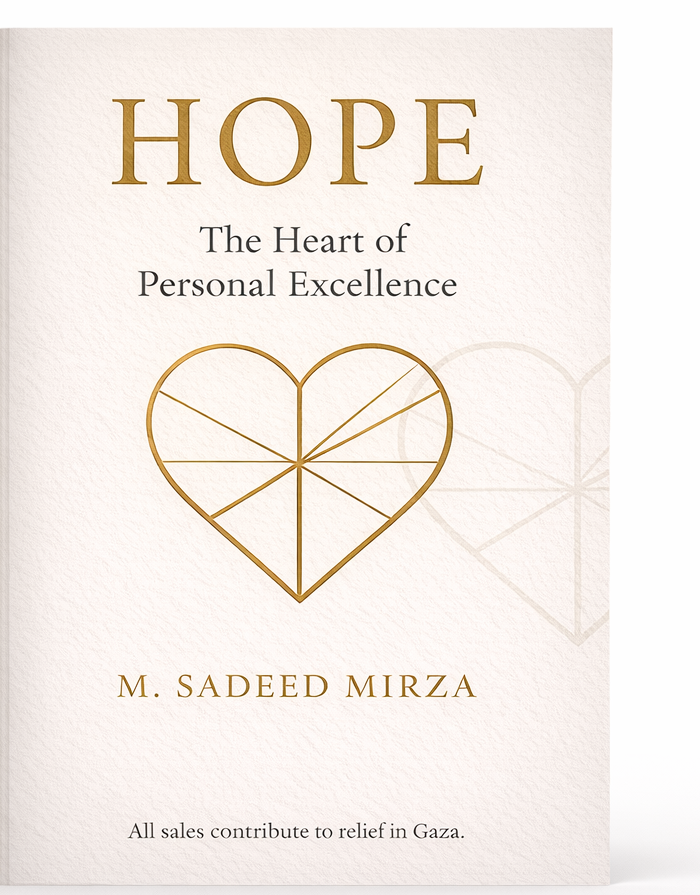
HOPE: The Heart of Personal Excellence
The HEART framework, in full: Heal, Empower, Align, Reframe, Transform.
Or get the free PDFWhere to begin
See the full structure of the CCH+ Mastery Suite + NLP. Take the free Readiness Audit. Or message us on WhatsApp and ask anything.
Two words for blue.
One sky.
The difference was always in the naming.
Get HOPE. free book + coaching insights
Subscribe and I'll send you a free PDF of my book HOPE, plus occasional, genuinely useful notes on coaching, counseling and hypnosis, and first word on new CCH+ cohorts across the GCC.