Islamic Psychology in Coaching: Why Faith Belongs at the Foundation
M. Sadeed Mirza · 1 November 2026

I trained for years in the best the field had to offer. World-class curricula. International faculty. Models that worked, on paper and often in practice too.
People set goals. Changed habits. Felt better for a while.
And then, sitting with Muslim clients, I kept noticing the same quiet thing. The tools were touching their behaviour. They were not yet touching their soul. For a person whose whole life is oriented around their Creator, the soul is not a layer to attend to later. It is the centre.
I have been working on that question for twenty years.
What the imported models leave out
Most modern coaching is built on a particular picture of the human being. Inputs, outputs, habits, mindset. A system to be optimised, as if a person were a slightly sluggish device that needs the right software update.
It is useful as far as it goes.
It has no language for the nafs. No language for fitrah, the original nature you came in with. No language for the difference between what a person wants and what is actually good for them. It treats restlessness as a problem to be solved. Sometimes restlessness is a sign pointing somewhere, and the person needs help to follow it.
Many Muslims feel this directly. They want help, and they want help that welcomes their deen into the room.
What Islamic psychology brings
Islamic psychology keeps what works in modern practice and grounds it. It gives the work a centre of gravity.
It names the layers honestly.
The generative work, building and striving, is Ihsan, the pursuit of excellence as worship. The remedial work, sitting with what has broken, is Sabr and Tawakkul, patience and trust when things fall apart. The deepest work, changing who you believe you are, is Tazkiyah and Muraqabah, the purification of the self and the watchfulness of the heart.
Words like fitrah and hikmah become tools you can use in a session. The result is identity-level change, anchored in something the person already believes is real.
That is why it holds.
Faith as the foundation
I want to be precise here, because the phrase Islamic coaching is used in many ways.
What I teach is a method whose foundation is Islamic psychology, with coaching, counseling, hypnosis and NLP built on top of it. The faith is the ground the whole structure stands on. That is what lets the work feel familiar to a Muslim client and serve them at the same time.
If this is the work you want to do
There is a real and growing need for practitioners who can do this well. In Pakistan. Across the Gulf. Throughout the diaspora, where faith-aligned help can be hard to find.
If you want to be one of them, start by finding where you stand. Take the free Readiness Audit. See the paths here: Programs.
The methodology is in my book, HOPE: The Heart of Personal Excellence. The short version is this.
People do not just want to function.
They want to become who they were created to be.
That is the work, and it is worth doing properly.
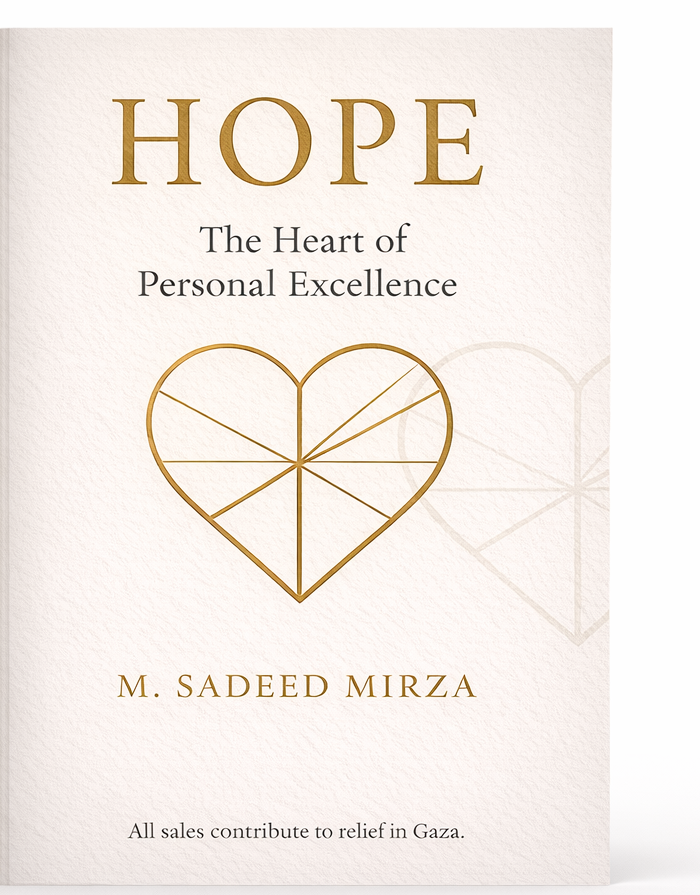
Get HOPE. free book + coaching insights
Subscribe and I'll send you a free PDF of my book HOPE, plus occasional, genuinely useful notes on coaching, counseling and hypnosis, and first word on new CCH+ cohorts across the GCC.